

MICHAEL INKPEN
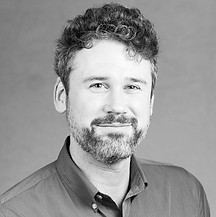
Michael S. Inkpen
Associate Professor of Chemistry, University of Southern California
Research Areas
Molecular-Scale Electronics • Self-Assembled Monolayers • Molecular Materials
Office: LJS 250
Phone: (213) 821-1910
Email: inkpen@usc.edu
Academic Appointments and Education
2026–Present — Associate Professor, University of Southern California, USA
2019–2026 — Assistant Professor, University of Southern California, USA
2017–2018 — Postdoctoral Research Fellow, University of Rennes 1, France (Marie Skłodowska-Curie Global Fellow)
2015–2017 — Postdoctoral Research Fellow, Columbia University, New York, USA (Marie Skłodowska-Curie Global Fellow)
2013–2015 — Postdoctoral Research Associate, Imperial College London, UK
2008–2013 — Ph.D., Imperial College London, UK
2004–2008 — M.Chem., Durham University, UK
Biography
Michael S. Inkpen obtained his M.Chem. from Durham University and his Ph.D. from Imperial College London, UK with Prof. Nicholas J. Long and Prof. Tim Albrecht (now at the University of Birmingham). He spent two years at Columbia University, USA as a Marie Skłodowska-Curie Fellow, in the group of Prof. Latha Venkataraman. In October 2017 he returned to Europe for the final year of his fellowship, working with Prof. Philippe Hapiot at the University of Rennes 1, France. In January 2019, he joined the Department of Chemistry at the University of Southern California as an Assistant Professor of Chemistry and was promoted to Associate Professor with tenure in 2026.
Research
Explore our research areas and projects through the Research and Publications pages.
Selected Awards and Honors
2023 - CAREER Award, National Science Foundation
2021 - Doctoral New Investigator Grant, ACS Petroleum Research Fund
2015 - Marie Skłodowska-Curie Global Fellowship, European Commission
Professional Profiles